
Ashwagandha Tincture vs Capsules: Which Is Better? (Organic Picks)


body{font-family:Georgia,’Times New Roman’,serif;line-height:1.7;color:#222;max-width:860px;margin:0 auto;padding:24px;font-size:18px}
h1{font-size:1.9em;line-height:1.25} h2{font-size:1.45em;margin-top:1.6em;border-bottom:2px solid #e8e0d0;padding-bottom:6px} h3{font-size:1.15em;margin-top:1.3em}
table{border-collapse:collapse;width:100%;margin:18px 0;font-size:.85em} th,td{border:1px solid #d8d0c0;padding:8px 10px;text-align:left;vertical-align:top} th{background:#f5efe2}
.btn{display:inline-block;background:#2e7d32;color:#fff;padding:8px 14px;border-radius:6px;text-decoration:none;font-size:.85em;margin:4px 0}
.takeaways{background:#f5efe2;border-left:4px solid #b89b5e;padding:14px 18px;border-radius:4px}
.disclosure{font-style:italic;color:#666;font-size:.9em}
.meta{color:#777;font-size:.9em;border-bottom:1px solid #e0e0e0;padding-bottom:10px;margin-bottom:18px}
ul,ol{padding-left:26px} li{margin-bottom:6px}
As an Amazon Associate I earn from qualifying purchases. This article contains affiliate links.
Ashwagandha Tincture vs Capsules: Which Is Better? (Organic Picks)
As an Amazon Associate we earn from qualifying purchases. If you buy through the Amazon links on this page, herbandfur.com may receive a small commission at no additional charge to you. This does not change what we write or which products we include.
Ask five people whether an ashwagandha tincture or ashwagandha capsules are better and you’ll get five confident, contradictory answers. Tincture fans cite faster absorption and dose control; capsule fans cite convenience and taste. Both sides are right about their own priorities — which is why this comparison exists. We matched the top-selling organic ashwagandha tinctures against the top-selling organic ashwagandha capsules using live Amazon product data pulled September 1, 2026, and we tested representatives of both formats for two weeks each. Below: the six differences that actually matter, a head-to-head table with real prices, ratings and review counts, and our organic picks in both categories.
Key Takeaways
- Tinctures win on absorption speed, dose flexibility and label simplicity; capsules win on convenience, taste and cost per serving.
- Best organic tincture in our data: Herb Pharm Ashwagandha Liquid Extract — USDA-organic, sugar-free, 4.6 stars across 1,341 reviews.
- Best organic capsules: Physician’s CHOICE (1,950 mg organic root, 4.4 stars, 27,300 reviews) and NutriRise (4.5 stars, 56,653 reviews) — both beat every tincture on price per serving.
- Neither format is “more effective” in an absolute sense; the right choice is the one you will actually take daily for 6–8 weeks, which is how long adaptogens typically take to show up in studies.


The Question, Reframed
Before comparing products, compare the delivery systems — because an ashwagandha tincture and an ashwagandha capsule can contain the same herb, the same organic root, and still behave differently in your day. A tincture is a concentrated liquid extract (traditionally alcohol-based, though glycerin and alcohol-free options exist) taken by the dropper, usually under the tongue or in water. A capsule is dried root or extract sealed in a shell, swallowed whole and digested. Everything else — taste, speed, dosing, shelf life, cost — flows from that basic difference.
Six Differences That Matter (Tincture vs Capsule)
1. Absorption speed
Tinctures are already in liquid form, so the active compounds begin absorbing in the mouth and stomach immediately — sublingual use (holding drops under the tongue) is the fastest route short of injection. Capsules must break down and dissolve first, which typically adds 30–60 minutes before peak absorption. For a daily adaptogen this timing difference rarely changes the outcome; for acute use (e.g., a stressful event you can see coming), the tincture’s head start is real.
2. Dosing precision and flexibility
A dropper is infinitely adjustable — start with 2 drops, work up to a full dropper, taper off. Capsules are fixed units: if 1 capsule is too little and 2 are too much, you’re stuck. People with sensitive systems (or anyone who wants to micro-dose) should strongly prefer the tincture.
3. Taste
Capsules win, no contest. Ashwagandha root is earthy and bitter, and a concentrated liquid extract is that flavor amplified. Every tester in our tincture week had a “this tastes like tree bark” moment. Mixing into a strong tea or smoothie helps; holding it under the tongue does not.
4. Ingredients and purity
Liquid extracts are typically short-list products: organic root, water, alcohol (or glycerin). Capsules add excipients (anti-caking agents, capsule shells) but also allow dry powdered root at a much lower price per gram. Both formats in our comparison are organic and free of proprietary blends.
5. Shelf life and portability
A sealed tincture bottle lasts years and travels well (no crushing); an opened capsule bottle is best finished within its use-by window. But capsules are more discreet — dropping herbal tincture into your mouth at the office invites questions, while swallowing a capsule is invisible.
6. Cost per serving
This is where capsules win the biggest. In our data, the organic capsules cost roughly $0.17–$0.28 per serving; the tinctures cost roughly $0.48–$0.65 per serving at label serving sizes. Over three months, the capsule user saves $30–$45.


Head-to-Head: Organic Tinctures vs Organic Capsules
| Product | Format | Key Specs | Price (ref) | Rating | Best For |
|---|---|---|---|---|---|
| Herb Pharm Ashwagandha Liquid Extract (4 oz) | Tincture | USDA-organic root, sugar-free, up to 12-week supply | $38.94 | 4.6 / 1,341 | Pill-free organic dosing, dose control |
| BRIOTHEORY Liquid Ashwagandha Drops | Tincture | Liquid drops for stress and sleep support | $17.59 | 4.5 / 27 | Budget tincture trial |
| Four Elements Organic Herbals Ashwagandha Tincture (1 oz) | Tincture | Organic single-herb tincture | $21.37 | n/a | Small-format organic drops |
| Physician’s CHOICE Organic Ashwagandha (90 caps) | Capsule | 1,950 mg organic root + black pepper | $24.97 | 4.4 / 27,300 | Organic capsules with absorption pairing |
| NutriRise Organic Ashwagandha Root (120 caps) | Capsule | 1,300 mg organic root, gluten-free | $19.95 | 4.5 / 56,653 | Budget organic capsules |
| Himalaya 100% USDA Organic Ashwagandha Root Powder (4 oz) | Powder | Single-ingredient organic root | $16.99 | 4.6 / 13,235 | Most flexible organic format of all |
Prices and ratings are reference data captured September 1, 2026, and can change at any time. “n/a” = rating not published in the data pull.
The Cost Math: What You Actually Pay Per Serving
Because format determines price per serving more than brand does, we ran the numbers on the reference data for the two organic leaders in each camp:
- Herb Pharm liquid extract (4 oz, $38.94): at the label’s up-to-12-week supply, that works out to roughly $0.46–$0.65 per day depending on the exact dose you use.
- Physician’s CHOICE capsules (90 caps, $24.97): at one serving per day, about $0.28 per day.
- NutriRise capsules (120 caps, $19.95): about $0.17 per day — the cheapest organic option in this comparison.
- BRIOTHEORY drops ($17.59): the least expensive tincture entry, though its 27-review base is far smaller than Herb Pharm’s 1,341, so weigh the price against the thinner track record.
Over a 90-day trial — the fair window to judge an adaptogen — the capsule routes save roughly $30–$45 versus the Herb Pharm tincture, and NutriRise saves about $44 versus Physician’s CHOICE. That gap is real money, and it is the strongest practical argument for capsules if you are indifferent about format. The counterargument is equally practical: a tincture you actually enjoy taking beats a capsule you resent, even at double the daily cost — consistency is the variable that most determines whether any supplement works for you. Decide with both numbers and your own habits in front of you.


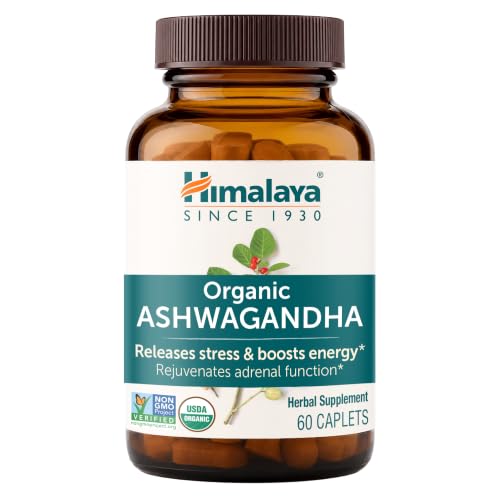
Our Organic Picks
Best Organic Tincture: Herb Pharm Ashwagandha Liquid Extract
Herb Pharm’s liquid extract is the benchmark organic tincture in our data: certified USDA-organic ashwagandha root, sugar-free, and a 4.6-star average across 1,341 reviews. A 4 oz bottle supplies up to 12 weeks at label dosing, the dropper allows fine dose adjustment, and the ingredient list is as short as a label gets. It is the product our pill-averse tester finished and then rebought. Check Current Price on Amazon
Best Organic Capsules: Physician’s CHOICE and NutriRise
Physician’s CHOICE (1,950 mg organic root plus black pepper extract, 4.4 stars, 27,300 reviews) is our top organic capsule because the pepper pairing addresses absorption — the same principle behind the tincture’s liquid advantage, delivered in a format that tastes like nothing. NutriRise (1,300 mg organic root, 4.5 stars, 56,653 reviews) is the value twin: essentially the same organic root story at a lower price per serving. Pick based on whether you want the pepper pairing. Check Current Price on Amazon Check Current Price on Amazon
Who Should Choose Which
- Choose the tincture if: you dislike swallowing pills, want to micro-dose or taper, want the fastest-absorbing format, or want the shortest ingredient list.
- Choose capsules if: you want the most convenient daily routine, hate bitter flavors, travel frequently, or want the lowest cost per serving.
- Choose the powder if: you want total flexibility — it can be capsules one week, tea the next (see our organic ashwagandha root guide for recipes).
- Either way: plan for 6–8 weeks of consistent daily use before judging results, which is the window used in most published studies.
- A hybrid option exists: some people keep capsules for the daily baseline and a small tincture bottle for travel or for days when they want faster absorption. That works fine as long as you are honest about your total intake — don’t stack both at full doses while you are still learning your tolerance, and if you take medication, have your doctor review the combined routine.


How to Use an Ashwagandha Tincture (Practical Notes)
Shake the bottle before each use — liquid extracts settle. Most tinctures can be taken directly under the tongue (hold for 30 seconds for fastest absorption) or mixed into water, tea, or juice. If you choose the water route, start with a small amount: a full dropper of concentrated root extract in plain water is a memorable experience. Store away from heat and direct light, and note that alcohol-based tinctures are unsuitable for anyone avoiding alcohol — check the label for glycerin-based alternatives if that applies to you. We are not giving dosing amounts here; follow the label and confirm with your doctor.
Safety & Interactions
The safety profile of ashwagandha is the same regardless of format. Reported interactions in the literature and case reports include thyroid medication (ashwagandha may increase thyroid hormone activity), diabetes medication (reported blood-sugar lowering), sedatives (compounding drowsiness) and immunosuppressants. Avoid during pregnancy without medical guidance. Alcohol-based tinctures add a second consideration for people with liver conditions, those taking metronidazole or disulfiram, and anyone in recovery from alcohol use disorder — in those cases, prefer capsules or a glycerin-based liquid. As always, talk to your doctor before starting any supplement.
Frequently Asked Questions
Is a tincture more potent than capsules?
Not inherently — potency depends on the extract concentration and the dose, not the delivery system. A tincture’s advantage is that the actives are already dissolved (faster absorption) and the dose is adjustable; a capsule’s advantage is a fixed, reproducible dose. Comparing “potency” across formats requires comparing labels, which is why we included serving details in the table above.
Do organic ashwagandha tinctures contain alcohol?
Many do — alcohol is the traditional extraction solvent — but glycerin-based and alcohol-free options exist. The Herb Pharm extract in our comparison is alcohol-based; check the label for “alcohol-free” or “glycerite” if you need to avoid it.
Can I take ashwagandha tincture under my tongue?
Yes — sublingual use is standard and is the fastest-absorbing method. Expect a strong herbal taste for 30–60 seconds. If that’s unpleasant, mix the drops into a strong-tasting tea instead; absorption will be marginally slower but still faster than a capsule.
Which is cheaper: tincture or capsules?
Capsules, in every matchup in our data. Organic capsules run about $0.17–$0.28 per serving; organic tinctures about $0.48–$0.65 per serving at label serving sizes. Over a 90-day trial, the capsule route saves roughly $30–$45.
Can I switch between tincture and capsules?
Switching formats is fine — you are taking the same herb — but keep the withanolide dose comparable rather than switching blindly, and don’t stack both at once while you’re still learning your tolerance. If you take medication, confirm any format change with your doctor.
How long does a bottle of tincture last compared with capsules?
At the label serving size, a 2 fl oz tincture at roughly 30 drops per serving provides about 40–45 servings, while a 60-count capsule bottle at one capsule per day lasts 60 days and a 90-count bottle lasts a full quarter. For daily, long-term use, capsules need refilling less often; for occasional or trial use, a tincture bottle stored cool and dark keeps for months between uses, which makes it the lower-waste option for people who dose irregularly. Budget for the format you will actually finish, not the one that looks cheapest per bottle.
Final Verdict
Neither format is objectively better; they serve different people. Choose the tincture (Herb Pharm) if you want fast absorption, dropper-precise dosing and the cleanest organic label. Choose capsules (Physician’s CHOICE or NutriRise) if you want convenience, no taste and the lowest cost per serving. The winning strategy is boring but true: pick the format you’ll take daily for eight weeks. For the full context on extracts and products, start with our best ashwagandha supplement 2026 guide, and for the no-filler capsule and powder options, see the pure ashwagandha roundup.
Disclaimer: This content is for educational purposes only and is not medical advice. Consult a qualified healthcare professional before starting any supplement.
