Dasuquin for Senior Dogs Review 2026: Is It Worth It?


As an Amazon Associate I earn from qualifying purchases. This article contains affiliate links.
Dasuquin for Senior Dogs Review 2026: Is It Worth It?
As an Amazon Associate we earn from qualifying purchases. If you buy through the Amazon links on this page, herbandfur.com may receive a small commission at no additional charge to you. This does not change what we write or which products we include.
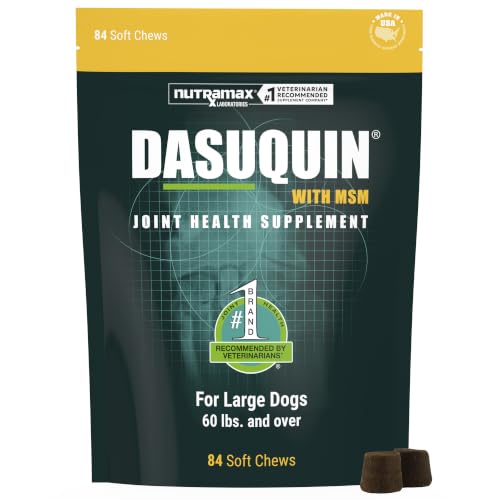
If you have searched for joint supplements for an older dog, you have almost certainly seen Dasuquin. It is one of the best-selling joint chew brands on Amazon — the Nutramax Dasuquin MSM formula for large dogs alone carries roughly 19,000 reviews at a 4.7-star average — and it is the supplement veterinarians most often recommend for canine osteoarthritis. But it is also one of the more expensive options on the shelf. This review looks at what is actually in it, which size and formula fits which dog, and whether the price is justified versus the alternatives.


Key Takeaways
- Dasuquin is a glucosamine-chondroitin-ASU joint chew with a strong evidence base and a vet-recommended pedigree.
- It comes in four main variants: Small/Medium, Small/Medium MSM, Large MSM, and Senior; prices range from about $30 to $66 on Amazon (September 2026 data).
- Most senior dogs benefit from the MSM variants; the Senior formula adds extra joint-support ingredients aimed at older dogs.
- It takes 4–6 weeks to see noticeable improvement — it is a management supplement, not a painkiller.
What Is Dasuquin?
Dasuquin is a joint supplement made by Nutramax Laboratories, the same company behind Cosequin. Its active ingredients are:
- Glucosamine hydrochloride — the building block for cartilage repair and joint fluid.
- Chondroitin sulfate — helps cartilage retain water and resist compression.
- Avocado/soybean unsaponifiables (ASU) — the ingredient that sets Dasuquin apart from Cosequin; ASU has research showing it slows cartilage breakdown.
- MSM (methylsulfonylmethane) — in the MSM variants, added for its anti-inflammatory support.
The ASU addition is the main reason vets reach for Dasuquin over cheaper glucosamine-only chews: it targets the inflammatory pathway that drives osteoarthritis, not just the cartilage-building side.


Dasuquin Variants Compared (September 2026 Amazon data)
| Variant | Best For | Price (ref) | Rating | Reviews |
|---|---|---|---|---|
| Dasuquin MSM, Large Dogs, 84 soft chews | Large breeds (60 lb+) with active arthritis | $58.07 | 4.7 | 18,965 |
| Dasuquin MSM, Small/Med Dogs, 42 soft chews | Small & medium breeds needing MSM | $29.99 | 4.6 | 12,712 |
| Dasuquin (no MSM), Small/Med Dogs, 84 soft chews | Small/medium dogs on a maintenance dose | $43.99 | 4.6 | 6,878 |
| Dasuquin Senior, Large Dogs, 84 soft chews | Senior large dogs (adds extra support) | $65.99 | 4.5 | 998 |
Prices and ratings as of September 2026; always check the current listing.
How We Evaluated It
Our assessment combines three inputs: the published ingredient science (glucosamine-chondroitin-ASU is one of the most studied combinations in veterinary joint care), the long-run buyer evidence (nearly 40,000 reviews across the main variants, mostly positive on mobility within 4–8 weeks), and the practical realities of dosing a senior dog — chewability, palatability, and how long a container lasts.


Pros & Cons
Pros
- Vet-recommended brand with a well-documented ASU advantage over basic glucosamine chews.
- Soft chew format that most dogs accept readily — no pill pocket needed for most dogs.
- Transparent dosing by weight; large-breed and senior-specific formulas exist.
- Overwhelming buyer track record: 4.5–4.7 stars across 19k+ reviews on the flagship variant.
Cons
- Expensive relative to supermarket joint chews — expect roughly $0.55–0.80 per chew depending on variant.
- Slow onset: you will not see results in a week; the full trial window is 4–6 weeks.
- Not a painkiller — dogs in significant pain still need veterinary pain management.
- Soft chews have a shelf life and can harden if the pouch is not resealed properly.
How It Compares to the Alternatives
Versus Cosequin, the same manufacturer’s cheaper line: Dasuquin adds ASU, which is the ingredient with the strongest evidence for slowing osteoarthritis progression — for a senior dog already showing stiffness, the difference is usually worth the extra cost. Versus hip-and-joint chews from Zesty Paws, Fera Pets, or You Move (all covered elsewhere in this silo): Dasuquin has the deepest clinical heritage and the largest review base, while the others typically win on price and added ingredients like collagen or turmeric. Versus fish-oil-based mobility supplements: those address inflammation from a different angle (omega-3s) and are often used alongside, not instead of, Dasuquin.


Dosage and Trial Expectations for Senior Dogs
- Follow the weight-based loading dose for the first 4–6 weeks, then step down to the maintenance dose.
- Give with food — absorption of glucosamine is better with a meal.
- Track a baseline: note how your dog gets up, climbs stairs, or jumps into the car before starting, then re-check at week 4 and week 6.
- If there is no improvement after 6–8 weeks, revisit with your vet — joint pain can be compounded by other issues (weight, dental pain, neurological conditions).
Who Should Buy It
Buy it if: your senior dog shows early-to-moderate stiffness (slow to rise, hesitation on stairs), you want the most evidence-backed joint chew on the market, and you can afford the premium. The Large MSM 84ct is the value pick for big dogs; the Small/Med MSM 42ct is a low-commitment starting point for a small dog.
Consider the alternatives if: your budget is tight (Cosequin or a budget glucosamine chew covers basic maintenance), your dog has already-diagnosed severe arthritis needing prescription pain management, or your dog simply refuses soft chews.
Dasuquin vs Cosequin: The Decision That Actually Matters
Most joint-chew decisions come down to one question: Dasuquin or its cheaper sibling Cosequin? Both are Nutramax products with the same glucosamine-chondroitin foundation, and both are widely vet-recommended. The difference is ASU (avocado/soybean unsaponifiables), which is in Dasuquin and not in Cosequin. ASU has research behind it as a cartilage-protective compound that targets the inflammatory pathway of osteoarthritis rather than just supplying building blocks. For a young dog on preventive maintenance, Cosequin at roughly half the price is a reasonable choice. For a senior dog already showing stiffness — slower to rise, hesitating on stairs — the evidence favours starting with Dasuquin. Our rule of thumb: if the dog is already symptomatic, the premium is justified; if you are purely preventive, save the money.
What Nearly 40,000 Reviews Teach Us
Across the main Dasuquin variants there are roughly 39,500 reviews, and the patterns in them are consistent. First, patience is the difference between success and failure: owners who saw results almost always gave it the full 4–6 weeks, while owners who gave up after a few days dominate the “didn’t work” reviews. Second, size selection errors are the most common user mistake — buying the Small/Medium formula for a large-breed dog means underdosing, and the reverse wastes money. Third, chew acceptance is real but manageable: most dogs take the soft chew as a treat, and the few that refuse usually accept it crumbled over food. Fourth, storage matters: soft chews that harden are usually chews that were left unsealed or in a hot car, and a hardened chew is often refused. Buy the size that matches the dog’s weight band, store the pouch sealed in a cool place, and commit to the trial window.
Common Mistakes When Starting Joint Supplements
The biggest mistake is expecting a supplement to behave like a painkiller — it does not. Joint supplements support cartilage and joint fluid over weeks; they will not mask acute pain. If your dog is crying, limping hard, or refusing to bear weight, that is a veterinary emergency-adjacent situation, not a supplement situation. Other common errors: switching products every two weeks (no trial can complete that fast), stacking multiple glucosamine products (redundant and needlessly expensive), and stopping the moment the dog looks better (maintenance matters — stopping often brings the stiffness back within weeks). Start one product, follow the weight-based dose, and let the 6–8 week window do its work.
Dosing by Weight: Which Container Is Right
Dasuquin dosing follows weight bands — small (under ~22 lb), medium (~22–60 lb) and large (over ~60 lb) — and each container size maps to a different daily cost. Working from the September 2026 reference prices: the Small/Med 42ct at one chew per day works out to roughly $0.71 per day ($29.99 ÷ 42) and lasts about six weeks; the Small/Med 84ct at $43.99 is about $0.52 per day and lasts twelve weeks — the better value if the dog is already committed to the supplement. The Large MSM 84ct at $58.07 is about $0.69 per day at one chew, but large breeds on the loading dose take two chews daily for the first 4–6 weeks, so the first container empties twice as fast. The Senior formula at $65.99 for 84 chews is the most expensive per day at roughly $0.79 — justified mainly when the extra senior-targeted support matters more than the price gap. Plan the first purchase around the loading phase, not the maintenance phase, so you do not run out mid-trial.
Where to Buy & What to Watch For
Amazon listings for Dasuquin come from multiple sellers, and the differences matter. Prefer listings marked “Ships from and sold by Amazon.com” or the official Nutramax storefront; third-party resellers sometimes mark the Senior formula up sharply or ship older stock. When the pouch arrives, check the expiry date, feel the chews for softness, and sniff for rancidity — a hard or sour-smelling chew has been stored badly and should be replaced. Be wary of deals that look too good: “Dasuquin alternatives” that are actually Cosequin or generic glucosamine repackaged are common, and the ASU in genuine Dasuquin is the whole point of the premium. If anything looks off, request a replacement rather than feeding a questionable product.
Buying links:
Frequently Asked Questions
Can Dasuquin be given with prescription pain medication?
Yes — Dasuquin is commonly used alongside NSAIDs and other pain management under veterinary direction. The supplement supports cartilage and joint fluid over weeks while the medication manages acute pain, so they are complementary rather than competing. Always coordinate with your vet and never adjust prescription medication yourself.
How long does Dasuquin take to work?
Most owners report visible improvement in mobility within 4–6 weeks. A 6–8 week trial is the standard recommendation before judging effectiveness.
Is Dasuquin safe for senior dogs?
Yes, for the large majority of dogs; it is one of the most commonly recommended supplements for canine arthritis. Dogs with liver or kidney disease should have the supplement approved by their vet first.
Dasuquin MSM vs Dasuquin without MSM — which should I choose?
MSM adds anti-inflammatory support and is usually the better choice for an already-stiff senior dog. The non-MSM version suits maintenance or dogs with known sensitivities to MSM.
Can I give Dasuquin with other supplements?
Generally yes, including fish oil. Avoid stacking multiple glucosamine products. Confirm combinations with your vet.
Is Dasuquin the same as Cosequin?
No. Both are Nutramax products, but Dasuquin adds avocado/soybean unsaponifiables (ASU), which is the differentiator for osteoarthritis support.
What if my dog refuses the chew?
Most dogs take Dasuquin soft chews as treats, but picky eaters exist. Practical fixes, in order: crumble the chew over wet food; mix it into a spoonful of xylitol-free peanut butter; warm it for a few seconds between your palms to release the smell; or hide it inside a pill pocket. If the dog still refuses after a week of trying, consider the Cosequin sprinkle-capsule format, which can be emptied over food — you lose the ASU, but a supplement the dog actually eats beats a supplement that sits in the bowl. Consistency matters more than format.
Final Verdict
For a senior dog with emerging joint stiffness, Dasuquin is the default recommendation for good reason: unmatched ingredient backing, a massive positive review base, and formulas sized to the dog. The cost is real, but so is the evidence — this is the rare supplement where the premium buys documented efficacy rather than marketing. Our pick: Dasuquin MSM, Large Dogs 84ct for big breeds, and the Small/Med MSM 42ct as the starter size for smaller dogs.
One last practical note: buy the container that matches the dog’s weight band and the loading-phase math, and set a calendar reminder for the six-week mark — that is the moment the trial verdict is actually ready. Most owners who report “Dasuquin didn’t work” quit before the evidence window closed; give the supplement its full trial before you judge it.
Disclaimer: This content is for educational purposes only and is not a substitute for professional veterinary advice. Always consult your veterinarian before adding supplements to your pet’s routine.