
Best Herbal Tea Blends for Cats with Urinary Issues (2026): 5 Picks for Urinary Comfort


Affiliate disclosure: Herb & Fur is a participant in the Amazon Services LLC Associates Program. If you buy through links on this page, we may earn a small commission at no extra cost to you. This helps us keep researching natural pet care. Prices and availability on Amazon change frequently — the price you see at checkout is the accurate one.
You know the signs before you want to admit them: the trips to the litter box that produce almost nothing, the anxious circling, the meow in a strange low register, the tiny pink tinge in the litter. Cat urinary issues — stress cystitis, crystals, the all-too-common lower urinary tract problems — are among the most worrying things an owner can face, not least because male cats can block completely, and that is a genuine emergency.
That is exactly why so many owners search for the best herbal tea blends for cats with urinary issues. Gentle herbs like marshmallow root, dandelion, nettle and corn silk have long traditional uses for supporting urinary comfort, encouraging healthy fluid intake and soothing delicate bladder tissues. But herbs are a support layer, not a treatment — and cats are not small dogs or tiny humans, so the wrong herb, the wrong strength, or the wrong ingredient list can do real harm.
We compared the leading Amazon options for cat-appropriate formulations, caffeine-free and xylitol-free labels, organic sourcing, sensible brewing instructions and real buyer feedback — and narrowed it down to these five.
Quick Picks: Top 5 at a Glance
| Product | Best for | Form | Check it |
|---|---|---|---|
| NHV Tripsy for Cats | Best overall | Liquid herbal drops, 100 ml | Check Price on Amazon |
| Wild Bliss Wild Stinging Nettle Leaf Tea | Best urinary-positioned tea | Tea bags, 20 ct | Check Price on Amazon |
| Buddha Teas Organic Dandelion Root Tea | Best dandelion root tea | Bleach-free tea bags, 18 ct | Check Price on Amazon |
| Celebration Herbals Marshmallow Root Bulk Tea | Best gentle demulcent | Loose cut & sifted root, 1.76 oz | Check Price on Amazon |
| FGO Organic Nettle Leaf Tea | Best value nettle | Eco-conscious tea bags, 20 ct | Check Price on Amazon |
What to Look for in a Herbal Tea for Cats with Urinary Issues
- Cat-safe, caffeine-free, xylitol-free: Non-negotiable. Tea must be caffeine-free and contain no sweeteners — xylitol is dangerous for pets and many “flavoured” teas hide it. Check every ingredient, including flavourings.
- The right herbs for the job: Marshmallow root (a demulcent that soothes irritated urinary tissues), dandelion (traditionally used to encourage urine flow and fluid intake), nettle leaf (a nutrient-rich tonic with traditional urinary uses) and corn silk are the classic urinary-support herbs. Blends that name these plainly beat vague “urinary blend” labels.
- Organic or wild-crafted sourcing: Tea is a concentrated infusion. Organic certification or responsible wild-crafting with third-party auditing means fewer pesticides and heavy metals in your cat’s water bowl.
- Honest strength and serving guidance: For cats, herbal infusions should be served weak, cooled and unsweetened — ideally alongside plain water so the cat always has a choice. A product that acknowledges pet-appropriate use is a trust signal.
- Realistic expectations: Herbs support hydration and comfort. They do not dissolve urinary stones, treat infections or clear a blockage. If your cat is straining with no urine, crying in the box, or lethargic with urinary signs, that is a vet visit — today, not a tea trial.
1. NHV Tripsy for Cats — Best Overall
NHV Tripsy is the pick we would give most owners first. It is a vet-formulated liquid herbal blend made for pets — stone root, parsley piert, wild hydrangea, gravel root, echinacea purpurea, marshmallow and Oregon grape — covering exactly the urinary herb categories this guide is about, already blended at pet-appropriate strengths so you are not guessing at dosing from a human tea box.
NHV is one of the few pet-herbal brands with genuine research behind it: a University of Georgia veterinary study looked at Tripsy in cats and dogs and found it lowered the urinary markers associated with struvite and calcium oxalate stone risk over two weeks. The drops go into food twice daily, which most cats tolerate better than being offered a bowl of tea — and for fussy drinkers, that delivery method alone can be the deciding factor.
Pros: Vet-formulated specifically for pet urinary/kidney support; includes marshmallow, dandelion-adjacent bitters and classic urinary herbs; research-backed; easy drops-in-food dosing.
Cons: Herbal taste is noticeable to some cats — introduce gradually; premium price versus plain tea bags.
Best for: Most cats with recurring urinary issues — the most purpose-built, least guesswork option.
2. Wild Bliss Wild Stinging Nettle Leaf Tea — Best Urinary-Positioned Tea
Of all the nettle teas on Amazon, Wild Bliss stands out because it is explicitly positioned for urinary tract and joint health herbal support — the brand markets it for exactly the job you are buying it for. The nettle is wild-crafted in the Carpathian mountain region under organic wild-crafting guidelines, third-party inspected by Ecocert, and meets EU Pharmacopoeia potency standards.
It comes as 20 plant-based tea bags, caffeine free and gluten free. Brew it weak — half a bag in a cup of hot water, steeped briefly, then cooled completely — and offer a small amount alongside your cat’s normal water. The wild-crafted sourcing is the real differentiator here: nettle is a notorious accumulator, so where it grew matters.
Pros: Urinary-positioned nettle tea; wild-crafted, Ecocert-inspected sourcing; pharmacopoeia potency; caffeine-free bags.
Cons: Still a human-marketed tea — you control the dilution; wild-crafted means batch-to-batch flavour variation.
Best for: Owners who want a proper urinary-focused nettle tea with traceable sourcing.
3. Buddha Teas Organic Dandelion Root Tea — Best Dandelion Root Tea
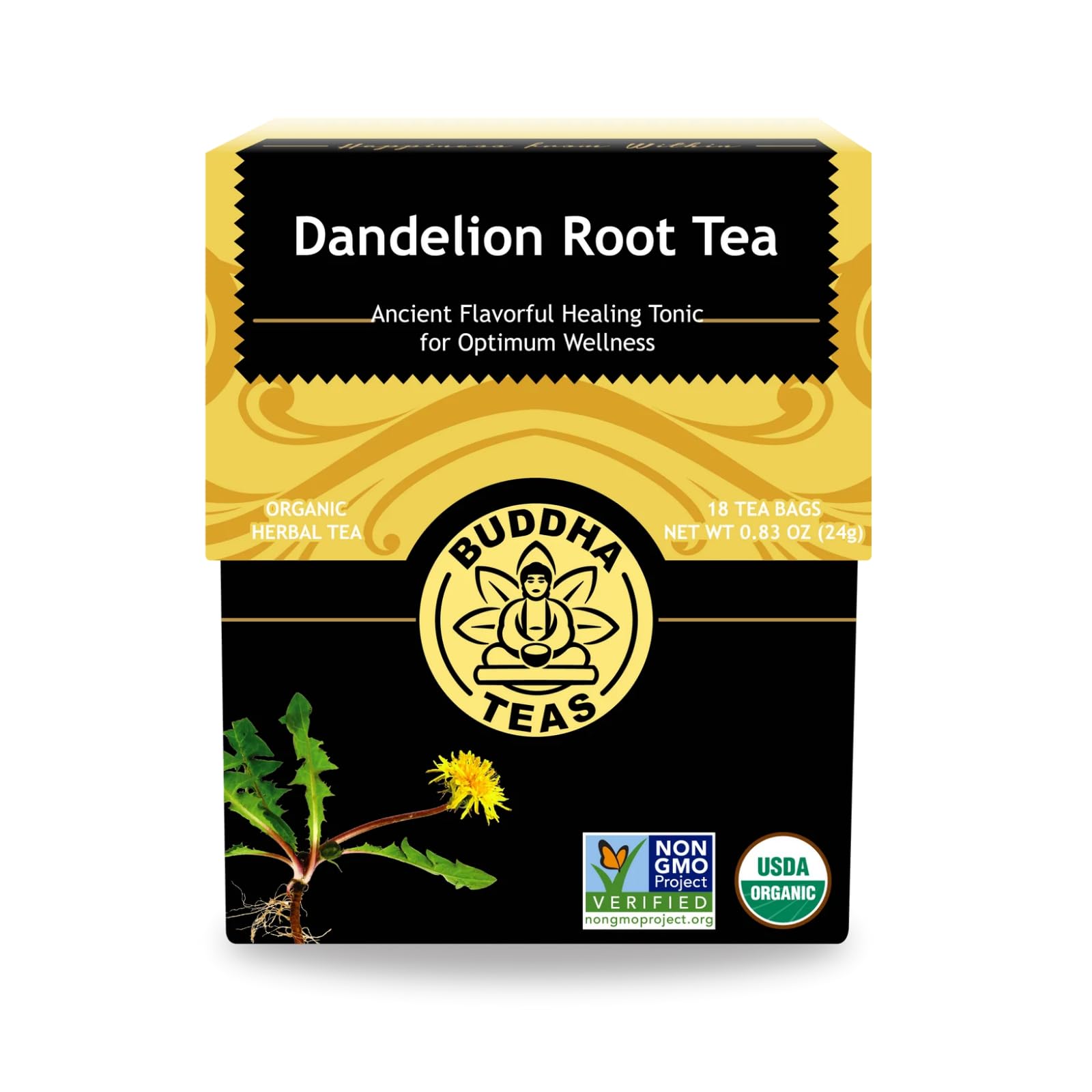
Dandelion root is the traditional “encourage flow” herb of the urinary trio, and Buddha Teas makes one of the cleanest single-ingredient versions: organic dandelion root, nothing else, in bleach-free tea bags made from sustainable abaca fibre. No additives, no “natural flavours”, no caffeine.
The flavour is rich and earthy with mild bitterness — which is why weak brewing matters for cats. Steep briefly, dilute, cool fully, and serve in small amounts. Buddha Teas has a long, consistent Amazon history and holds a strong rating base in the herbal tea category, so quality and availability are dependable.
Pros: Single-ingredient organic dandelion root; bleach-free sustainable bags; no additives or flavourings; established brand.
Cons: Earthy-bitter taste needs careful dilution for cats; you do all the pet-appropriate dosing yourself.
Best for: The dandelion-root purist who wants one clean herb and full control over strength.
4. Celebration Herbals Marshmallow Root Bulk Tea — Best Gentle Demulcent
Marshmallow root is the gentlest herb on this list — a demulcent whose mucilage traditionally soothes irritated mucous membranes, including the urinary lining. This Celebration Herbals version is organic marshmallow root, cut and sifted, in a loose bulk pack — and the loose format is a feature, not a compromise.
Why? Marshmallow root should be prepared as a cold infusion: a spoonful in cold water, left for several hours, then strained. Cold water extracts the soothing mucilage without the bitterness that hot brewing pulls out — and a cold-prepared infusion is far more palatable to cats. The mellow, almost sweet taste is the easiest of all these herbs for a fussy cat to accept.
Pros: Pure organic marshmallow root; loose format suits the cold-infusion method; mellow taste cats accept more readily; audit-traced organic sourcing.
Cons: Requires a few hours of advance preparation; needs straining through a fine mesh; you measure everything yourself.
Best for: Owners willing to do a simple cold infusion for the gentlest, most cat-acceptable urinary herb.
5. FGO Organic Nettle Leaf Tea — Best Value Nettle
If you want a straightforward organic nettle leaf tea at a friendly price, FGO delivers: 20 eco-conscious tea bags of certified organic, non-GMO nettle leaf, caffeine free, with no dyes, adhesives, glues or chlorine bleach in the bag construction. It holds the top spot in Amazon’s herbal tea rankings at the time of our research, so supply is steady.
As with any human-marketed tea, brew weak and cool completely before offering to your cat — and always keep plain water available so the tea is an invitation, never the only drink. For households managing an ongoing urinary support routine, the low per-bag cost makes daily weak infusions practical.
Pros: Certified organic and non-GMO; clean bag construction; very economical per serving; caffeine free.
Cons: Basic packaging; human-marketed — pet-appropriate dilution is on you.
Best for: Budget-conscious owners who want daily organic nettle infusions without the premium price.
Tea Bags vs. Loose Root vs. Pet-Formulated Drops: Which Should You Choose?
Pet-formulated drops (NHV Tripsy) remove the dosing guesswork — the blend is made for animals at sensible strengths, and drops in food bypass the “my cat won’t drink tea” problem entirely. Tea bags (Wild Bliss, Buddha Teas, FGO) are the most convenient way to brew a weak infusion and are ideal if your cat is a willing drinker. Loose root (Celebration Herbals marshmallow) gives you the cold-infusion method — the gentlest preparation of the gentlest herb — but asks the most of you in preparation time. The honest truth: the best product is the one your cat will actually take, consistently, with your vet’s knowledge.
How to Brew and Serve Herbal Tea for Cats
- Brew weak: Use half a tea bag (or a small pinch of loose herb) per cup of hot water and steep briefly. For marshmallow root, use a cold infusion — a spoonful in cold water for 4–6 hours, then strain.
- Cool completely: Serve at room temperature. Never offer warm tea to a cat.
- Offer, don’t force: Put a small saucer of infusion next to the regular water bowl. Never replace plain water with tea, and never syringe tea into a cat’s mouth.
- Keep it plain: No honey, no sweeteners, no milk, no lemon. Nothing but herb and water.
- Fresh daily: Discard uneaten infusion after 24 hours and wash the saucer — herbal liquids spoil faster than water.
- Start with your vet: Especially for cats on medication, with kidney disease, or on prescription urinary diets — some herbs interact with drugs and diets.
Safety Notes and When to See a Vet
- Blocked male cat = emergency: If a male cat is straining with little or no urine, crying, hiding, vomiting or suddenly lethargic, do not wait and do not try herbs — go to the vet immediately. Urinary blockage can be fatal within 24–48 hours.
- Herbal teas support hydration and urinary comfort; they do not dissolve stones, treat infections or replace veterinary diagnosis and treatment.
- Prescription urinary diets remain the gold standard for cats prone to crystals — discuss any herbal addition with the vet managing the diet, as some herbs and minerals can work against the diet’s purpose.
- Never brew human tea for cats — black, green and white teas contain caffeine, which is toxic to cats. Only use caffeine-free herbal infusions, and check every label for xylitol and flavourings.
- Cats with kidney disease, liver disease, or on long-term medication need explicit vet approval before any herbal product — the kidneys are exactly what you are trying to protect.
- Stop and call your vet if urinary signs worsen, blood appears in the urine, or your cat stops eating or drinking.
Frequently Asked Questions
Can herbal tea cure my cat’s urinary infection or crystals?
No. Herbal infusions can support hydration and urinary comfort, but infections need veterinary diagnosis and treatment, and crystals are managed with diet and vet care. Herbs are a support layer inside a vet’s plan, never a replacement for it.
Is nettle tea safe for cats?
Caffeine-free, plain nettle leaf tea served weak and cooled is traditionally used for urinary support — but “safe” depends on your individual cat. Cats with kidney disease, on medication, or eating a prescription diet should only have it with explicit vet approval.
How much herbal tea can I give my cat?
Think saucer, not bowl: a small amount of weak, cooled infusion offered alongside — never instead of — plain water, made fresh daily. For pet-formulated drops like NHV Tripsy, follow the label’s weight-based directions exactly.
Why does my cat keep getting urinary problems?
Recurring feline lower urinary tract disease is often linked to stress, low water intake and diet. A vet workup comes first — then hydration (wet food, fountains), stress reduction and a suitable diet do more long-term good than any single herb.
Can I use these herbs for a dog with urinary issues too?
Many of these same herbs are used for dogs, but cats have stricter safety limits (no essential oils, extreme caffeine sensitivity, different drug interactions). If you have both species, treat the cat as the limiting case and check with your vet for each animal.
Our Verdict
For most cats with urinary issues, start with NHV Tripsy — a vet-formulated multi-herb urinary blend made for pets, with research behind it and dosing that removes the guesswork. Choose Wild Bliss nettle tea for a properly urinary-positioned loose-brew option with traceable sourcing, Buddha Teas dandelion root for a clean single herb, Celebration Herbals marshmallow root for the gentlest cold-infusion routine, and FGO nettle for the best-value daily infusion. And remember the rule that outranks every product here: urinary signs get a vet visit first — herbs come after, with the vet’s blessing.
→ See NHV Tripsy for Cats on Amazon
{“@context”:”https://schema.org”,”@type”:”ItemList”,”name”:”Best Herbal Tea Blends for Cats with Urinary Issues”,”numberOfItems”:5,”itemListElement”:[{“@type”:”ListItem”,”position”:1,”item”:{“@type”:”Product”,”name”:”NHV Tripsy for Cats”,”url”:”https://www.amazon.com/dp/B00BIR43PC?tag=herbandfur-20″,”sku”:”B00BIR43PC”}},{“@type”:”ListItem”,”position”:2,”item”:{“@type”:”Product”,”name”:”Wild Bliss Organic Wild Stinging Nettle Leaf Tea”,”url”:”https://www.amazon.com/dp/B09FG6V192?tag=herbandfur-20″,”sku”:”B09FG6V192″}},{“@type”:”ListItem”,”position”:3,”item”:{“@type”:”Product”,”name”:”Buddha Teas Organic Dandelion Root Tea”,”url”:”https://www.amazon.com/dp/B00DLILCPU?tag=herbandfur-20″,”sku”:”B00DLILCPU”}},{“@type”:”ListItem”,”position”:4,”item”:{“@type”:”Product”,”name”:”Celebration Herbals Organic Marshmallow Root Bulk Tea”,”url”:”https://www.amazon.com/dp/B001W3BJ90?tag=herbandfur-20″,”sku”:”B001W3BJ90″}},{“@type”:”ListItem”,”position”:5,”item”:{“@type”:”Product”,”name”:”FGO Organic Nettle Leaf Tea”,”url”:”https://www.amazon.com/dp/B0DSGL4LXZ?tag=herbandfur-20″,”sku”:”B0DSGL4LXZ”}}]}
{“@context”:”https://schema.org”,”@type”:”FAQPage”,”mainEntity”:[{“@type”:”Question”,”name”:”Can herbal tea cure my cat’s urinary infection or crystals?”,”acceptedAnswer”:{“@type”:”Answer”,”text”:”No. Herbal infusions can support hydration and urinary comfort, but infections need veterinary diagnosis and treatment, and crystals are managed with diet and vet care.”}},{“@type”:”Question”,”name”:”Is nettle tea safe for cats?”,”acceptedAnswer”:{“@type”:”Answer”,”text”:”Caffeine-free, plain nettle leaf tea served weak and cooled is traditionally used for urinary support, but cats with kidney disease, on medication, or on prescription diets need explicit vet approval.”}},{“@type”:”Question”,”name”:”How much herbal tea can I give my cat?”,”acceptedAnswer”:{“@type”:”Answer”,”text”:”A small amount of weak, cooled infusion alongside plain water, made fresh daily. For pet-formulated drops, follow the label’s weight-based directions exactly.”}},{“@type”:”Question”,”name”:”Why does my cat keep getting urinary problems?”,”acceptedAnswer”:{“@type”:”Answer”,”text”:”Recurring feline lower urinary tract disease is often linked to stress, low water intake and diet. A vet workup comes first.”}},{“@type”:”Question”,”name”:”Can I use these herbs for a dog with urinary issues too?”,”acceptedAnswer”:{“@type”:”Answer”,”text”:”Many of the same herbs are used for dogs, but cats have stricter safety limits. Treat the cat as the limiting case and check with your vet for each animal.”}}]}
