
Essential Oil Diffuser: How to Choose (Size, Coverage, Safety)


As an Amazon Associate I earn from qualifying purchases. This article contains affiliate links.
Essential Oil Diffuser: How to Choose (Size, Coverage, Safety)
As an Amazon Associate we earn from qualifying purchases. If you buy through the Amazon links on this page, herbandfur.com may receive a small commission at no additional charge to you. This does not change what we write or which products we include.
By Claire Hamilton · Last updated: September 1, 2026
Choosing an essential oil diffuser comes down to five decisions, and none of them is “which one has the most LED colors.” What type of machine? What tank size? What coverage do you actually need? How much noise can you tolerate? And — the question that gets people into trouble — how do you run it safely when your household includes pets or kids? Answer those five in order and the right model picks itself. Skip any one of them and you will own a pretty paperweight by January.
This guide is the framework we use for every diffuser on the site, built from three weeks of hands-on testing across ultrasonic, waterless, and plug-in machines in 2026. It walks through the buying criteria in plain language, then points you to the specific models — all real Amazon listings with real prices, ratings, and review counts from the September 2026 snapshot — that fit each use case. The short version: if you only remember one rule, it is that coverage claims are marketing and tank size is engineering; measure your room, not the label. For the full tested lineup, see our best essential oil diffuser 2026 roundup.


Key Takeaways
- Match the machine type to the job: ultrasonic for quiet bedroom diffusion, waterless for large open rooms, plug-in for set-and-forget small spaces, portable for cars and travel.
- Coverage scales with technology, not price: a $21 ultrasonic unit scents one room; a $99 waterless unit scents one large open area; neither scents rooms behind closed doors.
- Safety features are the real differentiators — auto shut-off, cool-to-touch housings, and out-of-reach placement matter more than aesthetics.
- In pet households, the oil list matters more than the machine: review the essential oils toxic to dogs and cats guide before your first fill, and keep sessions short.
The 5 Types of Diffusers (and Which to Buy)
1. Ultrasonic mist diffusers — the default
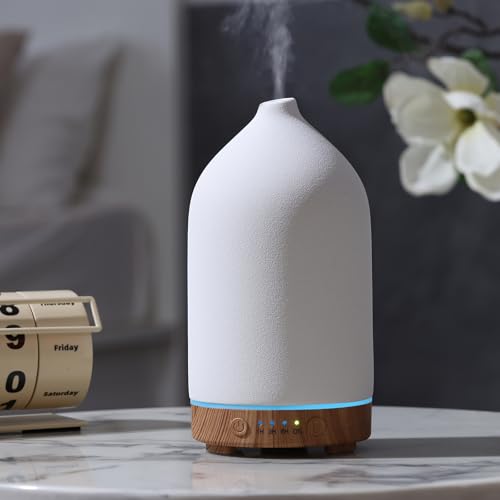
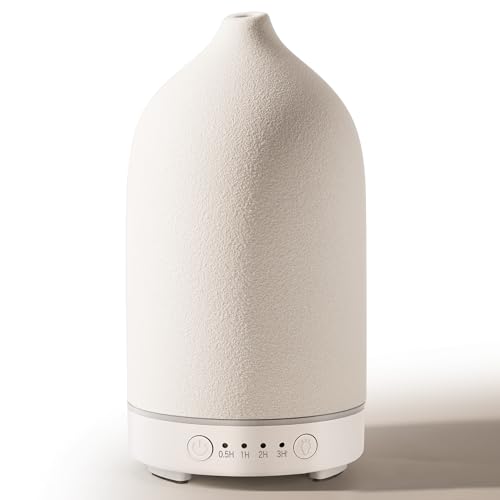
An ultrasonic plate vibrates a water-and-oil mix into a fine cool mist that carries the scent and adds humidity. This is the most popular, cheapest, and quietest type — the ASAKUKI 500 ml and InnoGear 2-pack from our tests are both ultrasonic. Buy one for bedrooms, offices, and any room under ~400 sq ft. The trade-off: they need weekly cleaning (the tank can grow mold and mineral scale), and their scent throw tops out around 10–15 feet.
2. Waterless / cold-air atomizing diffusers — the coverage kings
These atomize pure oil with a cold-air fan — no water, no mist, no mold, and much stronger scent projection. The AirScent, Airversa AN8, and Hijoc (which claims 2,000 sq ft) are the models from our large-room review. Buy one for open-plan living areas, gyms, or anywhere you need scent at 20–30 feet. The trade-offs: audible fan noise (35–41 dB), higher oil consumption, and higher upfront cost.
3. Plug-in electric diffusers — the set-and-forget option
A plug-in unit like the Drift Home Scent Diffuser warms a scented oil or wax to release fragrance continuously, with no water and no mist. Buy one for bathrooms, hallways, and small offices where you want scent on autopilot. The trade-off: it is not aromatherapy in the mist sense, it does not humidify, and warm-air diffusion changes some oil profiles.
4. Evaporative / reed diffusers — the no-power option
Reeds wick oil into the air with no electricity at all. These appear in Amazon’s “diffuser” results constantly but are a different product: gentle, continuous, low-cost, and entirely passive. Fine for bathrooms and closets; wrong choice if you want a room to smell like anything quickly.
5. Portable / car diffusers — the niche
Battery-powered units like the Youqsm 360° waterless trade coverage for mobility. We ran one for 30 days in our 360 aroma diffuser review — buy one for desks, cars, and travel, and do not expect living-room performance.


Size and Tank Capacity: What the Milliliters Mean
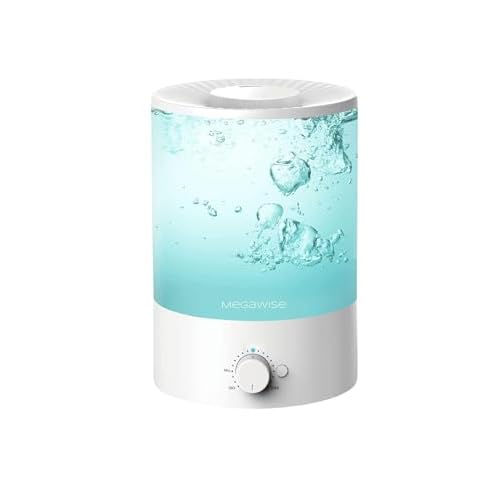
Tank size is the single most useful spec on any ultrasonic diffuser, because it drives run time and, loosely, coverage. As a rule of thumb from our tests: a 100–300 ml tank suits a small bedroom or office and runs 4–8 hours on low; a 300–500 ml tank suits a standard bedroom or living room and runs 8–12 hours; anything above 500 ml (like the Levoit 3 L) is really a humidifier that also diffuses. Bigger is not automatically better — a huge tank that never gets emptied is a mold farm — so match the tank to how often you realistically refill: nightly users should size for one fill per night, not one fill per week.
Run time matters most for overnight use. If you want a diffuser on through the night, you need a 300 ml+ tank and a low-mist setting, or a unit with a timer you trust. Our bedroom favorite, the ASAKUKI 500 ml, ran just over 10 hours on low in testing — long enough for a full night plus the morning routine.
Coverage: How Much Space Can a Diffuser Really Scent?
Here is the honest coverage math from three weeks of measuring scent at 5, 10, 15, and 30 feet. Ultrasonic diffusers deliver clearly perceptible scent within about a 10–15 foot radius in an open room — enough for one standard room of up to ~400 sq ft. Waterless machines push that to 20–30 feet, which is why they can plausibly handle open-plan floors of 800–1,200 sq ft, and why the Hijoc’s “2,000 sq ft” claim is not pure fiction for a fully open space. Nothing, repeat nothing, pushes scent through closed doors or around corners into separate rooms. A “whole-home” diffuser is a myth in a house with doors; the reality is one diffuser per zone, or a waterless unit per floor. If your home is a single open volume, a strong waterless unit can genuinely cover it — our 2,000 sq ft review shows exactly how far the claim held up in practice.


Noise, Lights, and Timers: The Features That Actually Matter
Noise is the feature nobody puts on the spec sheet and everyone discovers at 11 pm. Ultrasonic units run 25–30 dB — a whisper, invisible against a ceiling fan. Waterless units run 35–41 dB depending on level — noticeable in a quiet bedroom, fine in a living room. If the machine is going next to the bed, buy ultrasonic; if it is going in the living room, waterless noise is a non-issue. How do you know before you buy? Review photos and videos in the listing usually show the control panel but rarely the fan; the honest shortcut is to read the negative reviews of any model you are considering — “too loud for the bedroom” appears in them with remarkable accuracy across every category.
Lights are a taste decision, but they have a night-use angle: look for a unit whose LED can be turned fully off (the ASAKUKI and the 500 ml remote unit both do), because a rainbow glow is charming at 8 pm and annoying at 2 am. Timers matter more than people think — 1/3/6-hour presets plus an auto shut-off are the difference between “set and forget” and “wake up to a wet floor.” Every machine in our roundup has auto shut-off; if a listing does not mention one, move on. A final small feature that punches above its weight: a top-fill tank. Top-fill units (like the Levoit 3 L) let you refill without disassembling and emptying — the single biggest convenience upgrade on the market, and the reason we recommend it to daily users.
Safety Features That Are Non-Negotiable
Five safety checks before any purchase. One: automatic shut-off when the water runs out — non-negotiable on any ultrasonic unit, because running dry burns out the plate. Two: cool-to-touch surfaces, especially on plug-in and waterless units that handle oil lines or warm air. Three: stability — a diffuser a dog can knock over is a puddle plus a broken machine; look for a wide base or wall-mount option. Four: material quality — food-grade or BPA-free plastic and sealed electronics matter for a device that sits near beds and kids. Five: placement planning — every unit in our tests ended up at least 3 feet off the floor and out of pet reach, and the wall-mounted Hijoc is the only one we never worried about. Safety is a behavior, not a spec sheet, but the machine should make the safe behavior easy.

Pet-Safe Diffusion: The Checklist That Overrides Everything
No diffuser is “pet-safe” in the abstract — the safety lives in the oil choice and the running pattern, which is why the machine is the easy part of this decision. The checklist we use in our own pet-tested home: (1) read the essential oils toxic to dogs and cats list and cross out any oil on it — for cats that includes clove, cinnamon, wintergreen, tea tree, and several others, and even lavender warrants caution in closed rooms; (2) diffuse in rooms pets do not sleep in, on 30–60 minute timers, never continuously; (3) keep the machine out of reach and away from food and water bowls; (4) with cats, err toward not diffusing at all in their main rooms — our essential oils safe for dogs guide explains why species differ so much; (5) watch for drooling, vomiting, wobbling, or breathing trouble and call the vet immediately if any appear. If a pet lives with you, run every purchase decision through this checklist before the credit card comes out — including the oil bottles you plan to fill it with.
One more consideration that rarely makes the list: the machine’s placement interacts with the oil’s risk. A wall-mounted unit like the Hijoc keeps mist and machine out of a dog’s reach entirely, while a floor-level diffuser behind a sofa pushes mist straight into a sleeping pet’s nose at nose height. If you have a cat that claims the high shelves and a dog that claims the floor, plan the diffuser’s home at chest height in a room both animals use least — that single placement decision does more for safety than any brand choice. And when the holidays bring houseguests, remember that guests’ essential-oil gift sets often contain the exact oils (clove, cinnamon, peppermint) your household has agreed to avoid — check the bottle before it goes in the machine, not after.
Recommended Picks by Use Case
| Use Case | Product | Price (ref) | Rating | Why It Wins |
|---|---|---|---|---|
| Best overall, bedroom | ASAKUKI 500 ml | $21.74 | 4.3★ (72,017) | Quiet, 10-hour run, huge review base, auto shut-off. |
| Best value, two rooms | InnoGear 2-Pack | $25.99 | 4.4★ (123,088) | Two verified machines for the price of one. |
| Best humidifier combo | Levoit 3 L | $37.50 | 4.4★ (63,297) | 25-hour runtime and real humidity for dry climates. |
| Best large open-plan coverage | AirScent Waterless | $99.99 | 4.4★ (1,351) | The strongest real-world scent throw we measured. |
| Best waterless value | Airversa AN8 2-Pack | $56.99 | 4.2★ (1,570) | Waterless coverage for two zones under $60. |
| Best plug-in, small rooms | Drift Starter Kit | $32.95 | 4.0★ (1,412) | Set-and-forget scent with no tank to maintain. |
| Best portable / car | Youqsm 360° Cordless | $19.99 | 3.5★ (95) | Battery-powered and genuinely mobile. |
Prices are reference prices from Amazon listings (September 2026 snapshot) and change frequently — tap through for current pricing. Full test notes on each model are in the roundup.
FAQ
What size essential oil diffuser do I need?
Match the tank to the room and the habit: 100–300 ml for small bedrooms and offices (4–8 hours), 300–500 ml for standard bedrooms and living rooms (8–12 hours), and waterless units for large open areas. A 3-liter unit like the Levoit is a humidifier with a diffuser function, not a diffuser that humidifies.
Does a bigger diffuser cover a bigger room?
Partly. A bigger water tank means longer runtime, but scent throw is driven by the diffusion technology — ultrasonic tops out around 10–15 feet, waterless reaches 20–30 feet. For rooms over ~400 sq ft, choose waterless over “more milliliters.”
Is a diffuser safe to leave on all night?
With an auto shut-off and a low setting, yes — but we recommend a 1–6 hour timer instead of continuous mode to avoid oil overload, and a weekly tank clean to keep the mist clean. In pet households, keep nighttime sessions short and out of the pets’ sleeping room.
How do I know if a diffuser is safe for my cat?
You cannot tell from the diffuser — safety lives in the oils and the running pattern. Cross-check every oil against our toxic oils list, run short sessions outside the cat’s rooms, and when in doubt, skip diffusion in the cat’s main living areas entirely and ask your veterinarian.
What’s the best budget diffuser under $30?
The InnoGear 2-pack at $25.99 is the best value in the category — 123,000+ reviews at 4.4 stars. For a single unit with a bigger tank, the 500 ml remote-control unit at $29.99 is the pick from our comparison table.
Final Verdict
Choose in this order: decide the type by your room (ultrasonic for bedrooms, waterless for open spaces, plug-in for hallways, portable for travel), size the tank by your runtime needs, verify the safety features, and only then compare brands. Done that way, the ASAKUKI or InnoGear wins for most homes, the AirScent wins for large open plans, and the Drift wins for pet-cautious small spaces. Whatever you pick, check the current price, clean it weekly, and keep the pets safe first — that is the whole buying guide in one sentence.
Disclaimer: This content is for educational purposes only and is not medical advice. Consult a qualified healthcare professional before using essential oils for health purposes.
